

From Rogation to Trinity: A Theological Symphony
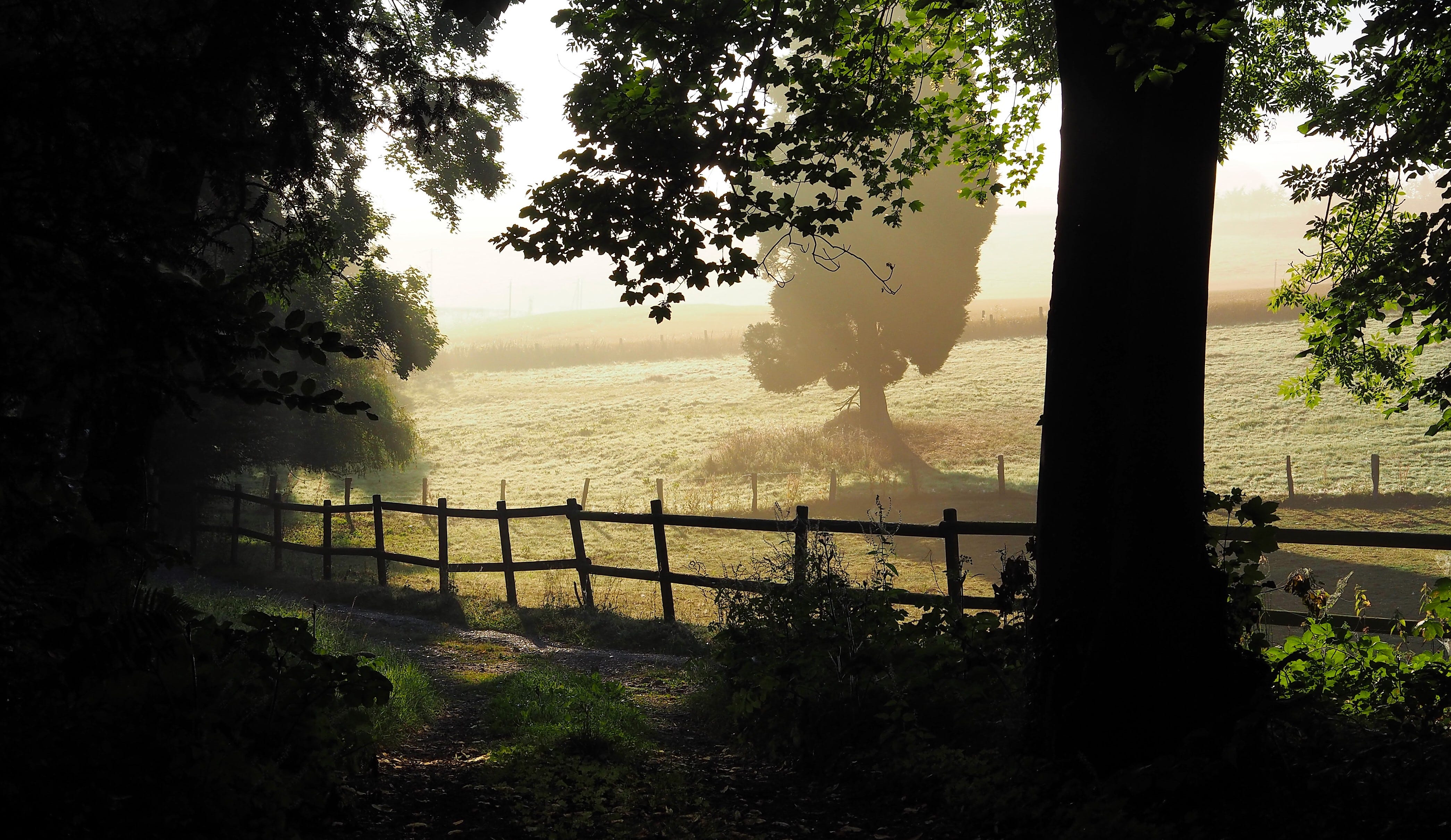
We’re now in a stretch of the Church year that I love almost more than any other. The world doesn’t really notice it. Even the Church sometimes seems to hurry through it so breathlessly that it hardly pauses on the extraordinary things it keeps saying. Common Worship stretches so urgently towards Pentecost that it barely stops to listen to what the music is doing along the way.
And there is music here. The weeks from Rogation Sunday through Ascension, Pentecost, and Trinity Sunday move like one long theological symphony — each feast a distinct movement, each building on what came before, the whole gathering depth and splendour as it progresses. Because none of these holy days has to compete with Christmas shopping or the compulsory cheerfulness of Easter bank holidays, they retain a certain integrity. They can simply be themselves: luminous, unhurried, strange — and together they express almost the whole of what Christians believe.
It is worth slowing down enough to hear each movement properly.
First Movement: Rogationtide
The first movement opens in the character of a pastorale — not a tempo so much as a world: outdoors, in the unhurried rhythms of field and season. Beethoven heard a brook in it. Handel heard sheep. The Church, in Rogationtide, hears something older still — creation held in being by a word of love, and the human creature moving through it with gratitude and petition.
Rogation comes from the Latin rogare — to ask. This first movement opens not with a fanfare but with petition. Ask, and it will be given to you; seek, and you will find; knock, and the door will be opened (Matt. 7.7). To ask is to acknowledge that what we need lies beyond what we can supply. It’s an act of creaturely honesty, and Rogation makes an act of creaturely joy.
The Church’s neglect of Rogationtide is telling. Even our liturgical text lists it almost apologetically: The Sixth Sunday of Easter, with Rogation Sunday trailing after the colon. But this pastoral opening movement is doing something essential. It establishes the ground — literally and theologically — on which everything that follows will stand.
The old custom of beating the bounds contains an entire theology of creation. The parish would walk its boundaries praying over fields, homes, streams, roads, and crops — asking God’s blessing upon the land and the common life rooted there. The pace is deliberate. The attention is local. The Church moves through the specific landscape it inhabits, reminding itself that grace descends into particular places: this field, this stream, this town.
There is something profoundly anti-gnostic about this opening movement. It refuses the ancient temptation to treat the material world as mere backdrop, as something to be escaped rather than hallowed. We are creatures before we are consumers. We receive life before we organise it. We belong before we choose. We love because he first loved us (1 John 4.19) — and we learn to love concretely, in the actual texture of neighbourhood and place, or we do not really learn it at all. We can’t love humanity in general while remaining permanently irritated by the people next door. Where we live becomes inescapably a workshop for how we love.
The old parish processions were acts of praise disguised as walks — and, if the records are honest, accompanied by considerable quantities of ale. But their instinct was sound. The Church moved slowly through the landscape reminding itself that grace doesn’t abolish nature. It hallows it. As Traherne understood so radiantly, the world isn’t a prison to escape or a resource to exploit but a splendour to be wakened into. The pastorale knows this. It is always, at its heart, a form of praise.
The first movement ends not with resolution but with attentiveness — eyes open, feet on the ground, hands raised in petition. The fields have been blessed. The bounds have been walked. The music has established, with patient care, the earth from which everything else will grow.
Second Movement: Ascension
Then the key changes.
Ascension Day arrives and suddenly all this local, earthy attentiveness is swept up into something of an entirely different order. If Rogationtide is the soft opening movement — measured, grounded, unhurried — the Ascension is the great maestoso: majestic and moving with the gravity of something momentous.
When he had led them out to the vicinity of Bethany, he lifted up his hands and blessed them. While he was blessing them, he left them and was taken up into heaven (Luke 24.50–51). Luke’s account has a strange, unhurried quality — a blessing still in progress as Jesus disappears from view, as if the gesture continues beyond what eyes can follow. The second movement begins, characteristically, in the middle of something.
What the Church Fathers returned to again and again is the humanity of the ascended Christ. Not just the divine nature returning to the right hand of the Father, but human nature — wounded, glorified, irreversibly embodied — carried into the very life of God. He who descended is the very one who ascended higher than all the heavens, in order to fill the whole universe (Eph. 4.10). The ascended Christ doesn’t leave creation behind. He fills it.
This second movement transforms everything the first movement established. The fields and streams and parish boundaries of Rogationtide aren’t left behind; they’re caught up into a larger vision. If human flesh now dwells eternally in God, then bodies matter. History matters. The face of the forgotten person matters. The poor man sheltering in a doorway and the lonely woman in the care home carry a glory the world can’t begin to calculate, because human nature itself has been carried into heaven.
And in an age increasingly fascinated by strongmen, the maestoso of the Ascension is persistently subversive. The ruler of the cosmos is the crucified Jesus. The wounds aren’t erased by glory; they’re glorified. Every earthly claim to absolute authority stands implicitly judged by the one who reigns from a cross. Power itself has been redefined from within, by sacrifice. The deep logic of reality isn’t domination. It’s communion.
The movement ends on that chord — and holds it, just long enough for us to feel the weight of glory, before the third movement begins.
Third Movement: Pentecost
Pentecost is the con fuoco of the symphony: fire, wind, speech suddenly breaking open across every boundary of language and nation. If the maestoso held its chord, the con fuoco scatters everything exuberantly outwards. God’s love has been poured into our hearts through the Holy Spirit who has been given to us (Rom. 5.5). There’s something almost embarrassing in the extravagance of that image — poured in, not measured out, not rationed. Babel begins, slowly, gloriously, to unwind.
What strikes me about this movement is that its energy doesn’t flatten things into uniformity. The miracle of Pentecost isn’t that everyone suddenly speaks one pre-Babel language — assumed, where I now serve, to be Cymraeg. The miracle is that each person hears the gospel in his or her own tongue. Jeremy Begbie, in Theology, Music and Time, draws on the phenomenon of polyphony — multiple distinct voices sounding simultaneously without merging — as an image of redeemed human community: the voices remain distinct because of their relationship, not despite it.
Pentecost is the great polyphonic moment of the Christian year. The Spirit moves fast but it moves specifically. Our distinctiveness isn’t dissolved in the rush but transfigured by it — we are not, as Paul puts it, unclothed but further clothed, so that what is mortal may be swallowed up by life (2 Cor. 5.4). The local, the bodily, the particular: these are taken up, not swept away. In the Body of Christ, the more we share in his humanity, the more we become truly ourselves.
The movement is exuberant because what it announces is almost too intimate to take in. Do you not know that your body is a temple of the Holy Spirit within you? (1 Cor. 6.19). Not the Church building. You. God doesn’t simply forgive humanity from a distance. He takes up residence. The Spirit is the coronation gift of the ascended King — not gold scattered to subjects, but divine life poured into human hearts, in the very places where we live.
Fourth Movement: Trinity Sunday
And then, after all this movement, comes Trinity Sunday — and the symphony arrives at something that feels less like a conclusion than a vast, patient largo: slow, deep, almost motionless at the surface, with everything moving far beneath.
To dedicate a feast to the Trinity might seem like an invitation to abstraction — as if, after all the earthy particularity of Rogation and the fire of Pentecost, we’re finally ascending into pure doctrine. But Augustine understood that the movement from created things towards their source isn’t an escape from music but its fulfilment.
For what the doctrine safeguards isn’t a theological puzzle but a living reality: that at the heart of all things is the eternal movement of love — the Father giving himself wholly to the Son, the Son returning himself wholly to the Father, the Spirit proceeding as the joy and bond of that exchange. Creation flows from this abundance. God doesn’t create because he lacks companionship or meaning. He creates because love, by its nature, overflows. For from him and through him and to him are all things (Rom. 11.36). The universe exists because love delights in being shared. In the end, all is gift.
And here, in the stillness of this final movement, the whole sequence comes into focus. Rogation taught us to love creation because it proceeds from God. Ascension revealed creation’s true king. Pentecost filled creation with divine life. Trinity unveils the eternal source from which it all flows — the ground bass, present all along beneath every movement, now at last audible in its own right.
A largo of this kind doesn’t so much end as gradually, gracefully, become silence. And into that silence the Church settles into the long green season of Trinitytide, the calendar relaxing into patience. Prayer, repentance, Eucharist, neighbourliness, forgiveness, small fidelities quietly repeated. The great symphony is over. But something has changed in the hearing of it.
Begbie argues that music doesn’t escape time or transcend it — it redeems it from within, by filling temporal movement with meaning. This season has done precisely that. We’ve been led through time towards what time was always carrying — through the movements of created things towards the eternal measure in which they participate. If we stop long enough to listen, these few weeks will train our ears until they can hear, in the ordinary rhythms of the world, the music that suffuses all things.
And if you continue to listen, you’ll find that the hedgerow sounds different afterwards. So does the altar. So does your neighbour.
Oh, now I wish I had gone to Communion and breakfast this morning! Lovely post. I’ve gone beating the bounds once, and during the pandemic a church that I know in South London live-streamed a small group of church wardens and parishioners beating the bounds of their parish with appropriate prayers at civic landmarks. I watched it and it was very moving.
I'd never heard it referred to as "Trinitytide." I like that so much better than "Ordinary Time." It is so much more evocative and to the point. And anchors this long span in God's story so much more effectively than simply a reference to how we count the Sundays.