

Four Last Things
The Endings and Beginnings of Advent
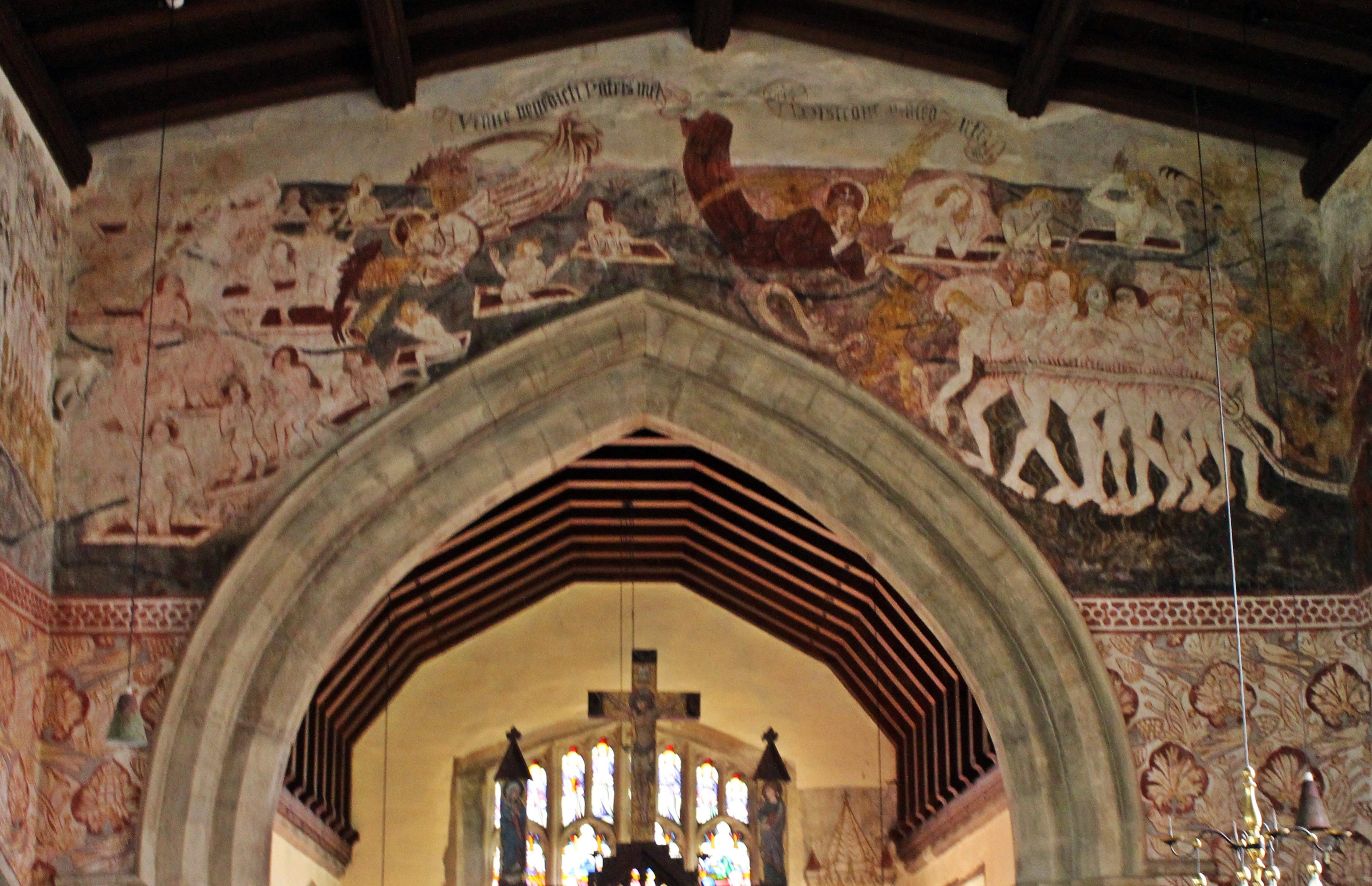
The Christian liturgical calendar begins at the end. In its ancient wisdom, the Church recognised that beginnings are best understood in the context of endings. Advent was never intended as a carefree countdown to Christmas. Traditionally, it has been a season of reflection, a time to confront the Four Last Things: death, judgement, heaven, and hell. Before the carols and festivities, congregations were asked to wrestle with mortality, moral accountability, and the ultimate destiny of the soul. In this way, the liturgical year opens not with celebration but with the offering of a moral and spiritual compass for life’s unfolding.
There’s a subtle wisdom in this arrangement. As the year draws to a close, our minds naturally turn backward, reviewing what has passed and what we might have done differently. Yet Advent redirects that reflection outward and forward, towards the inevitable and the eternal: the certainty of death, the accountability of judgement, and the opposing destinies of heaven and hell. These may seem grim, even austere, to modern ears, yet they serve to remind us that life is bounded, that freedom carries responsibility, and that attention to moral limits isn’t a constraint but a form of guidance. By confronting the limits of life and the stakes of our choices, we’re invited to live with greater attention, humility, and moral clarity—a preparation not only for the year to come, but for the life that stretches beyond the the here-and-now.
Death
From this vantage, we can begin with death, the ever-present companion of human life. In pre-modern times, death wasn’t a distant abstraction; it was immediate and unavoidable. Children, neighbours, and loved ones disappeared with alarming regularity, and disease, infection, and accidents made mortality impossible to ignore. Even ordinary life was precarious: harvests could fail, travel was perilous, and medicine offered little reassurance. Preachers reminded their congregations that life is fragile and fleeting, drawing from texts like Psalm 103:
“As for mortals, their days are like grass; they flourish like a flower of the field; for the wind passes over it, and it is gone, and its place knows it no more.”
Memento mori, in this context, wasn’t intended to frighten so much as to teach humility, attentiveness, and the value of the time that has been given.
Even in our comparatively sheltered modern lives, reflecting on mortality can ground us. Though we’re insulated from the constant presence of death, we’re not exempt from it. Awareness of mortality sharpens our sense of purpose, heightens our appreciation for the ordinary moments of life, and encourages us to focus on what truly matters: the care of others, the cultivation of meaningful work, and the attention to the relationships that shape us. Death, then, is both a limit and a teacher, reminding us that the time we have is precious and finite.
Judgement
Closely following death comes judgement, the reckoning of one’s choices and actions. In Advent sermons, this was understood as both personal and cosmic: every individual would one day give an account of life before God. Judgement reminds us that our freedom is never absolute and that our actions carry consequences, often far beyond our immediate perception. Augustine, writing to judges, argued that even those entrusted with earthly power are accountable to a higher standard, a principle that needs a revival.
At the close of the year, judgement asks us to weigh not only what we’ve done, but how well we’ve fulfilled our responsibilities—to God, ourselves, our communities, and to the world at large. It calls attention to the patterns of our lives, to the choices we’ve repeatedly made, and to the ways in which we’ve acted—or failed to act—in service of others. Judgement isn’t only an admonition but also a lens: it shows us how our small, everyday decisions intersect with the wider moral order, how personal integrity ripples outward into society, and how inattention or neglect can have profound consequences.
Heaven
Amid these sombre reflections, the Church offered the vision of heaven, the promise of life fully realised. Heaven isn’t merely a reward; it’s a perspective that gives meaning to death and judgement. It reminds us that life can be abundant and purposeful, that our efforts—though bounded in time—are caught up into something enduring. The vision of heaven allows us to see our struggles and labours in a larger context: acts of kindness, moments of courage, and even patient endurance aren’t meaningless. They’re necessary ingredients for lives suffused with love, beauty, and justice.
As we reflect on the closing year, heaven offers the horizon against which our small victories, failures, and aspirations can be measured. It instils hope and offers a corrective to despair. Where death reminds us of limits, and judgement highlights accountability, heaven opens the possibility of transcendence, showing that life’s efforts, however humble, can contribute to a broader and more enduring good.
Hell
Finally, there’s hell, the least popular but equally instructive of the Four Last Things. In medieval teaching, hell was the great equaliser: no rank, title, or privilege could exempt one from moral consequences. Just one glance at any doom wall painting shows that much. Hell embodies the reality that ignoring responsibility, acting selfishly, or turning away from love has a cost. Today, even in secular terms, we witness these consequences in fractured communities, environmental crises, and social neglect. The social, ecological, and political costs of ignoring limits are clear: inequality and exclusion corrode societies; reckless governance and erosion of institutions destabilise civic life; and the exploitation of natural resources imperils the world we share. Hell reminds us that the stakes are real, that living without attention, care, and moral grounding is never without penalty.
The Lessons of the Four Last Things
Taken together, the Four Last Things offer a paradoxical lesson. They teach us the necessity of limits and the promise of abundance. Death and judgement make clear that life is bounded and that transgression carries consequence. Heaven and hell illustrate why those boundaries exist: to turn the experience of our daily lives towards the possibility of a life of love, justice, and joy, and to warn that disregard of these principles leads to suffering.
Even in our secular age, these reflections remain urgent. We see the consequences of exceeding our limits everywhere: climate change and environmental degradation threaten the very basis of life; political recklessness and the erosion of institutions destabilise societies; and social fragmentation, inequality, and the breakdown of community leave many isolated and powerless. Creation itself has become a preacher of judgement, reminding us that our actions matter, that natural bounty is finite, and that disregard of limits carries real costs. By facing the reality of mortality and moral accountability, we cultivate the habit of living deliberately and responsibly, preparing ourselves to meet the year ahead—and the life beyond it—with greater care and awareness.
Advent, then, isn’t only a season of preparation for Christmas but a meditation on endings and beginnings, on moral reckoning, and on the stakes of our lives. By contemplating death, judgement, heaven, and hell, we’re invited to pause, to reflect, and to recognise that every ending holds the seed of renewal. The closing of the year becomes a portal, guiding us towards deliberate living, ethical responsibility, and the hope of a life fully realised. In embracing these truths, we approach not only the new year but every day with clarity, purpose, and the awareness that our time, though limited, is infinitely precious.
What a joy to see a reflection the Four Last Things, the traditional Advent preparation. A serious reflection on the realities of faith, and a true preparation for Christmas !