

Formed for Faithfulness (4): When We Lost Our Story
Tracing the Erosion of Anglican Imagination and Common Life
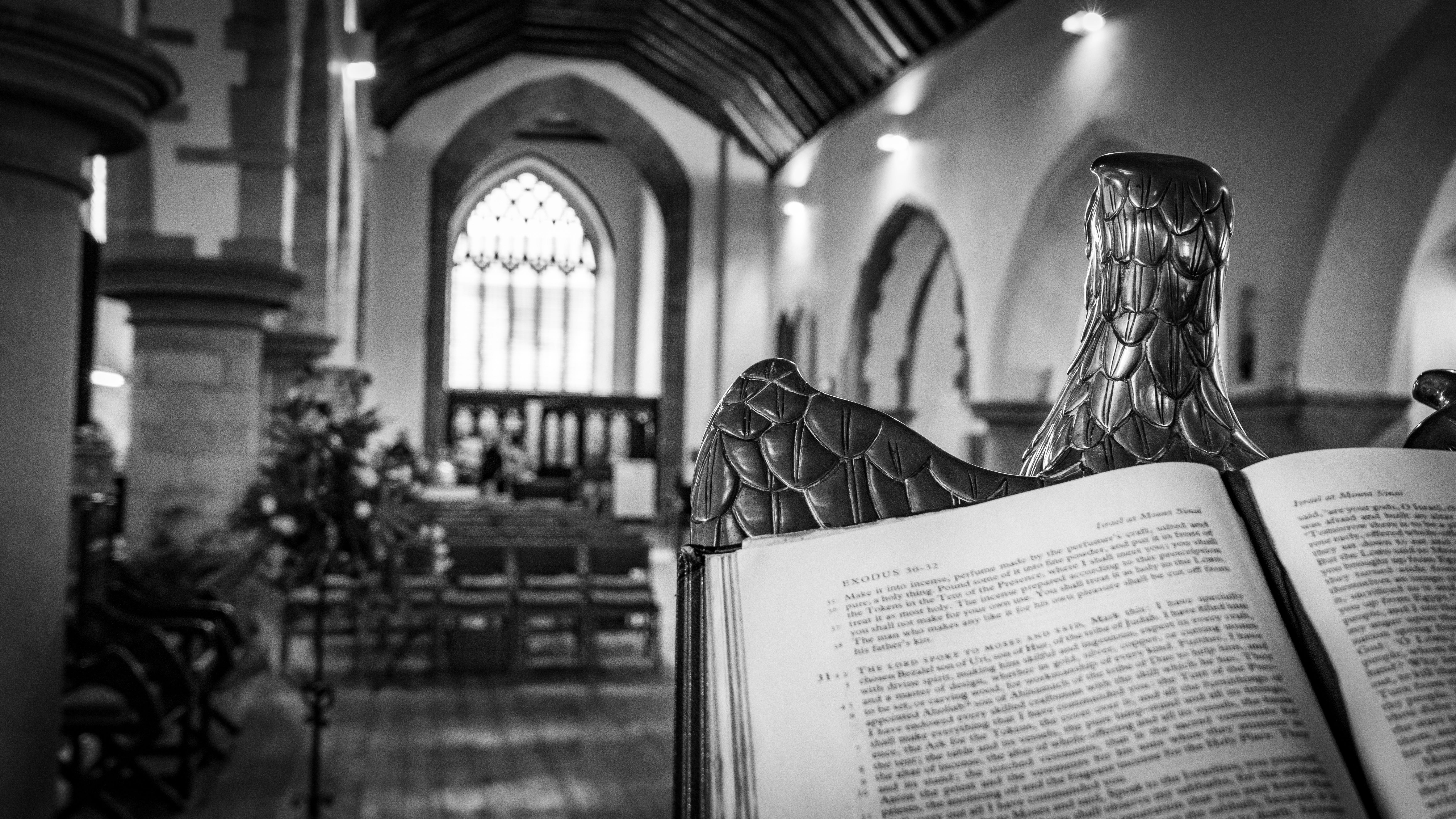
In my earlier reflections (found here, here, and here), I’ve suggested that our Anglican malaise isn’t simply due to protracted decline or unending doctrinal and moral disputes. It reflects a loss of confidence in purpose and authority, of belonging to a community capable of inspiring our deepest loyalties. But these developments point to something deeper still: an erosion of our knowledge of, and trust in, the story that once made Christian life intelligible, endurable, and worthy of our fidelity.
Anglicanism has never depended on a single theological system or tightly defined identity. It has always been a broad, sometimes untidy tradition, shaped by compromise, doctrinal stalemates, patience, and an grudging tolerance for unresolved tension. Evangelicals and Catholics, scholars and parish priests, reformers and traditionalists have long shared the same ecclesial space without needing to settle everything first.
What made this possible was orientation rather than uniform agreement. Anglicans once shared enough sense of where they were in the sweep of history—what God has accomplished in Christ through the cross and resurrection, and how history unfolds within that completed act of redemption. That shared story gave disputes a place to sit. Differences could be argued within a narrative everyone recognised, even if they couldn’t fully articulate it.
Crucially, the Anglican story was formed through a combination of teaching, symbols, and embodied practices. Sermons, catechesis, and moral instruction provided conceptual clarity, interpreting Scripture, tradition, and the moral world. At the same time, participation in public worship, the Christian year, sacraments, and moral habits reinforced these teachings in lived experience. Faith was absorbed gradually, both cognitively and imaginatively, through repeated engagement with the rhythms and forms of communal life. Instruction illuminated practice, and practice embodied instruction. Together, they shaped imagination, desire, and moral discernment. This integration allowed Anglicans to inhabit a moral and spiritual world in which repentance, forgiveness, and hope were ordinary realities, not abstract ideals.
Today, that story no longer frames reality for many Anglicans. Scripture remains known and valued, but it functions increasingly as a secondary vocabulary—reflective or inspirational—rather than as the imaginative lens through which we instinctively understand the world. Competing narratives—progress, self-realisation, consumerism, psychological wellbeing—now govern moral imagination and practical judgement. Biblical language persists, but increasingly as a resource rather than the story that shapes life.
Moral Energy Without Moral Shelter
One of the most striking features of contemporary Anglicanism is the intensity of its moral debates. In this respect, the Church is neither indifferent nor weary; it speaks urgently about justice, dignity, and faithfulness. What is missing is a shared moral shelter: a lived, recognisable world capable of holding concerns and disagreements within a common orbit.
In earlier generations, moral disagreement unfolded within thick webs of shared practice. Anglicans prayed together according to the Book of Common Prayer. Through the steady repetition of the Psalms, they learned a shared language for joy, fear, anger, and hope, spoken before God. The lectionary wove ordinary lives into the sweeping story of creation, fall, and redemption, not as an abstract idea but as the lived horizon of time. In Holy Communion, dependence on God and reconciliation with neighbour were enacted physically and communally before being fully grasped conceptually. Self-examination and confession treated moral failure as ordinary, while absolution placed forgiveness firmly in God’s mercy. Through these and other practices, Anglicans inhabited a moral and spiritual world that needed no constant explanation.
What mattered here was the combined rhythm of instruction and practice, teaching and enacting a story that shaped imagination, desire, and moral discernment. Some could articulate the theology clearly; others might struggle to explain why the words mattered. What counted was participating in a life where teaching and practice mutually reinforced one another, making it possible to inhabit the story well, especially in moments of personal and social crisis. Belonging to a story-formed community came first; understanding followed gradually, often instinctively, absorbed through both mind and body in the shared life of worship, prayer, and moral engagement.
Today, that communal life has eroded. Anglicans increasingly inhabit different imaginative worlds. Moral positions become primary markers of identity rather than secondary expressions of baptismal belonging. Common life has weakened; shared practices no longer sustain the moral imagination. As a result, debates that were once held in the context of a shared moral horizon now become existential. Every disagreement feels decisive; every defeat unthinkable.
A Church That Has Lost Its Sense of Time
One of the clearest signs of this deeper loss is how the Church now relates to time. Anglicanism once lived within a thick sense of history. The past was treated as an inheritance to be received with gratitude and discernment. Scripture, prayer, and custom located the Church in a story stretching across generations, binding the living, dead, and unborn. Church buildings themselves reinforced this memory: memorials and inherited furnishings testified to the faithfulness of generations past, while the handing on of prayer books and Bibles made tangible the continuity of devotion. Faithfulness meant inhabiting tradition responsibly, trusting that what had formed us might also form those who came after us.
This temporal confidence has frayed. Anglican history is now approached in sharply divergent ways: by some as a compromised legacy to be escaped; by others as incidental to an appeal to Scripture unmediated by tradition; by others as a reservoir of meaning to be drawn upon selectively in the work of self-expression; and by others still as more a source of beauty and ritual than moral or theological authority. Each relates to history as an object to be judged or ignored rather than an on-going story to be inhabited. When the past is no longer held as a shared story, capable of forming, correcting, and obliging, it ceases to anchor communal identity and instead becomes a resource to be curated individually.
This shift has profoundly reshaped authority. Where once it flowed naturally from participation in a story believed to be true—working narratively before it worked procedurally, creating norms and creating moral gravity—it now resides in policies, frameworks, and technical expertise. Authority has become preventive rather than generative, focused on managing risk instead of nurturing a shared and generative life. It’s now an institutional response to the fragility of communal imagination, a way for the Church to maintain order in the absence of a deeper story.
Worship increasingly mirrors this cultural shift. It now tends towards personal expression, adapting to individual taste rather than immersing participants in a shared narrative. Tradition is treated as optional, Scripture as mainly inspirational, and the careful intertwining of teaching and practice—through which Anglicans were historically formed into a communal story—as secondary. The Church retains forms shaped for a world in which its story was broadly assumed, yet now exists in a culture where that story no longer frames reality. Familiar rituals persist, but without the binding narrative that once gave them coherence and gravity. They risk becoming hollow gestures rather than a means of forming hearts and imaginations in the life of the story.
In other words, the Anglican malaise is ultimately a story problem. Our forms of life, worship, and teaching no longer immerse people in the narrative of God’s redemptive work. Moral concern, debate, and administration can’t substitute for the imaginative formation that once made Anglicanism coherent, meaningful, and enduring. The Church retains its vocabulary, liturgy, and rituals but not their persuasive power because they’re no longer experienced as part of a shared, living story.
The result isn’t collapse (at least, not yet), but an almost unbearable strain. The Church remains earnest, active, and morally serious. It works hard and speaks out often. Yet it persuades less than it hopes and forms more shallowly than it intends. It hasn’t yet fully reckoned with how much it once depended on a shared story patiently enacted in worship and common life.
Signs of Fragmentation
Several patterns illustrate the depth of this malaise:
Divergent moral imaginaries: Anglicans increasingly inhabit distinct moral worlds, guided more by cultural assumptions or personal taste than by the shared story of God’s work in Christ. This divergence exacerbates debates, as participants struggle to recognise even the horizon of meaning that might hold disagreements in constructive tension.
Fragmented worship and ritual: Liturgical participation often serves personal preference rather than communal formation. Services may please aesthetically, but they no longer reliably convey a moral and spiritual universe in which the faithful are shaped.
Weak imaginative authority: Teaching remains, but it often functions as advice or social and political commentary rather than as an immersive guide into a living story. Catechesis is intermittent, and formation in households or parishes is inconsistent, leaving gaps in moral and spiritual habituation.
Temporal disorientation: The Church’s past is contested, curated, or aestheticized, rather than embraced as a living inheritance. Confidence in historical continuity and the moral authority of tradition has declined, further weakening the imaginative and formative power of Anglican identity.
The cumulative effect is a Church that retains form but lacks gravitational coherence. Its energies, intellect, and goodwill remain, yet its imaginative power to orient desire, sustain moral discernment, and bind people into a story-formed community is diminished. The Church is no less serious, but less capable of absorbing disagreement, shaping desire, or sustaining faithfulness over a lifetime.
Looking Forward
Recognising this loss is only the beginning. The Church obviously can’t return to a Christendom model of cultural dominance or easy consensus. Yet it must form faithful life within a fractured, anxious, and increasingly uncertain age. The task ahead is to reorder teaching, worship, and communal life so that we’re once again immersed in a shared story that shapes hearts, minds, and communities over time. Now that the diagnosis of our Anglican malaise has been made, its time to begin to explore how Anglican imagination, practices, and institutions can reclaim the formation that once made faithful life both possible and compelling—showing that in these difficult times, the Church can offer a faith worth inhabiting.
An excellent diagnosis. For Anglicans in North America, this is particularly true.
Moral positions become primary markers of identity rather than secondary expressions of baptismal belonging.
One of my friends, a liberal Bishop a generation ago, always reminded folks that Baptism is the identity sacrament. I quote him to our open communion people.
At first sight, I read "shared moral horizon" as "shared meal horizon." We Anglicans are no longer all in communion with one another, in the quite literal sense of being able to receive communion in one another's churches, because entry to the meal has been restricted to those who assent to the moral. To put it another way, the lex credendi has become the rule for the lex orandi rather than the other way around.
I am not speaking here about differences of opinion on sacramental validity around women in holy orders, but of exclusive communion based on one's subscription to traditional Christian sexual mores. It seems to me that, as you say, our abandonment of common prayer (which I would say comes with all parties, Catholic, Evangelical and Latitudinarian, abandoning the titular Book thereof) has led to a polity of communion based not on formative shared rites, but on credal affirmation.
An opponent of women's ordination who subscribes to traditional sexual mores might say that GAFCON has done the right thing for the wrong reasons. I hope that the conservative Anglican world will have more of a shared imagination than liberal approaches to Scripture allow, but I fear that commitment to Scripture and the Articles without reference to the liturgy in which our souls are formed will lead, as it appears already to be doing, to further schisms. The cart has been put before the horses, and they are bolting in all directions.
We need something like the consensus Darwell Stone identifies between 19th century Tractarians and Evangelicals, before the relativising impact of historical-critical scholarship turned the entire faith into a free-for-all.