

Formation in Faith (6): Learning to See Again
Cultivating the Anglican Imagination and Habits that Reveal God’s Reality.
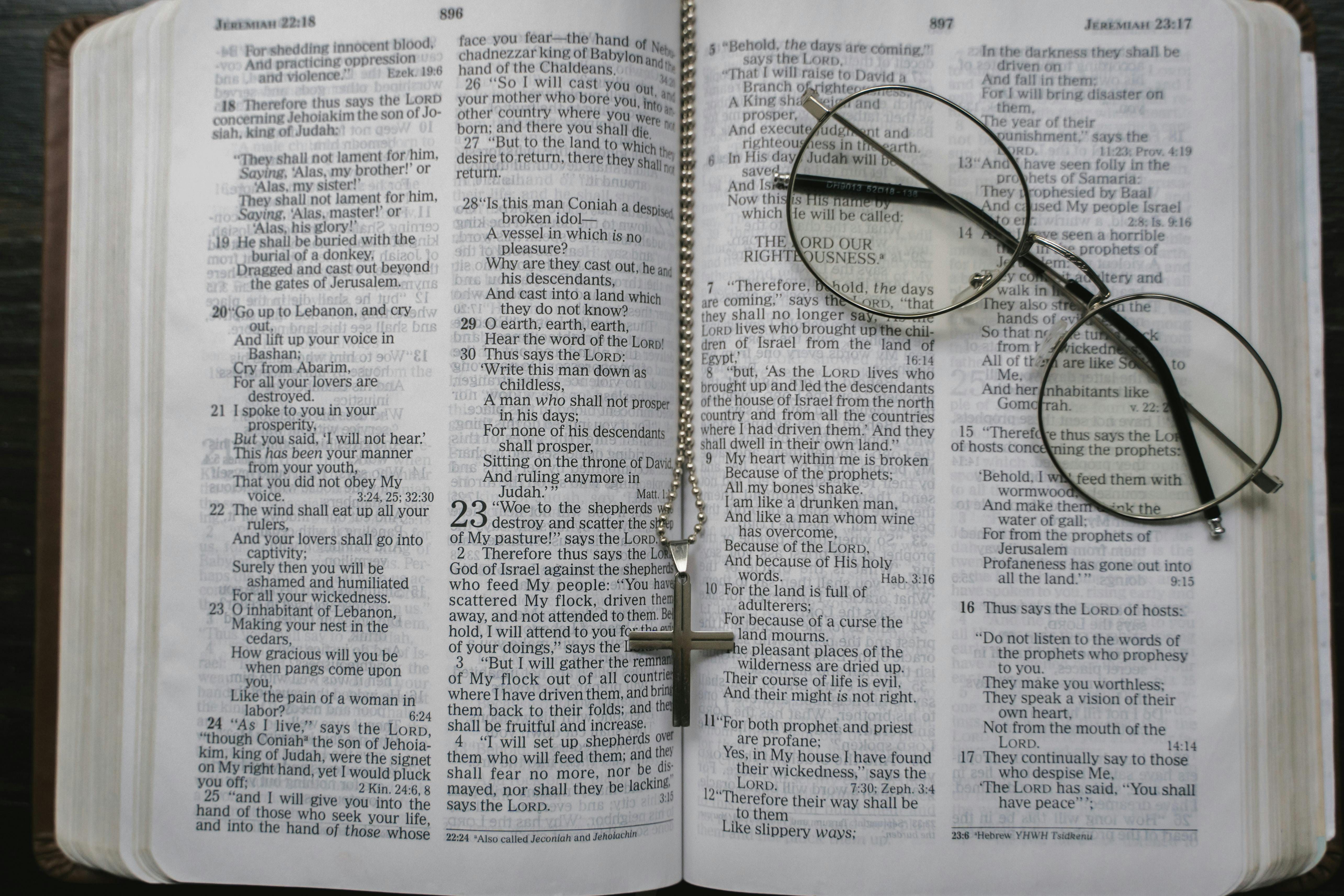
Any community that hopes to shape lives must rest on some shared sense of what’s real. This doesn’t need to be a formal theory, but there must be at least a lived awareness of what matters, what endures, and what can be trusted. When that awareness is strong, formation happens almost naturally. When it weakens, even treasured practices begin to feel rote, repeated out of habit, unmoored from anything solid.
Christian formation rests on the conviction that the world is still addressed by God. Beneath the confusion and brokenness of our time, there remains a living reality we neither constructed can control. Faith isn’t an escape from the world but a way of learning to see it clearly. Over time, we are schooled to recognize the world as it’s revealed in Christ.
For much of its history, Anglican Christianity lived from the conviction, though too often complacently and imperfectly. Scripture was received as containing “all things necessary to salvation” — not merely as a sourcebook of doctrines or moral rules, but as the story into which the Church itself is drawn: creation, redemption, and the restoration of all things in Christ. Worship and teaching shaped imagination, helping people perceive God’s presence and action. By inhabiting that story together through prayer, hymns, and shared practice, Christians could learn to see creation as good, human life as accountable, and communities as shaped by God’s redeeming work.
Today, that confidence has faded. Scripture is less often taught in depth or kept as a daily companion in prayer. Its story is rarely given the time or space to form our desires and our common life. The danger is not only disbelief but abstraction. God becomes an idea, distant and vague, rather than the living centre of a worshipping people and of a world ordered in Christ.
As the great Anglican theologian Richard Hooker insisted, Scripture isn’t just a guide for private conscience. It’s the foundation of the Church’s shared life. When we inhabit it together, we’re trained to live within a reality shaped by God’s word and made known in the Gospel.
Without that shared engagement, formation is either assumed to happen on its own or dismissed as too demanding for busy lives. Attention drifts toward the delivery of worship—how it feels, how it’s received—while the deeper shared life that once sustained it slowly erodes. The health of the Church is measured by what it offers rather than by the people it is forming.
Yet programmes and initiatives can’t replace the deeper work of trust: the confidence that God is still at work. Still speaking in common prayer. Still forming a people through patience and faithfulness. Still drawing us into his strange, new world manifested in Christ, by which the world is rightly understood.
At its best, Anglican theology offers something countercultural: a shared attentiveness to God’s steady shaping of the world. Through Scripture, common prayer, Word and Sacrament, and ordinary practices of faith, people are formed over time. They become participants in Christ’s ongoing work—communities able not only to speak of redeeming love, but to recognize it, live within it, and bear witness to it in the world.
Seeing Before Acting
From the beginning, the Church understood its task not as imparting doctrine or enforcing morality, but as proclaiming Christ crucified and raised—a message that confounds the assumptions of every age and unsettles what the world calls strength, success, and wisdom. The apostolic proclamation began with an announcement: God has acted decisively in Jesus Christ. A new reality has been disclosed. The world isn’t what it takes itself to be.
The sermons in Acts make this claim again and again. They reinterpret suffering, power, failure and hope in the light of Jesus’ death and resurrection. Before anyone is told what to do, they’re told what God has done. Seeing comes before acting.
That order has shaped the Church’s understanding of formation ever since. God acts first; we respond. Faithfulness doesn’t begin with self-improvement or inner determination. It grows as we’re steadily exposed to the reality of God. As Romans 12:2 puts it, we’re not to be conformed to the pattern of this world, but transformed by the renewing of our minds. Christian teaching, preaching and pastoral care are therefore about re-orientation. They help us grasp where we are, who God is, and how to live in response.
Richard Hooker captured this well. He resisted reducing Christianity to moral rules or propositional statements. For him, the world remains understandable because it’s still held within God’s wisdom. Even amid sin and disorder, reason and moral order remain accessible because God’s wisdom continues to operate within human experience. “God hath not left himself without a witness,” he insists, grounding moral and spiritual life in a world that is still addressed, sustained, and governed by God.
This conviction shapes the Church’s common life. God’s wisdom reaches us through Scripture, through shared practices, and through the patient discernment of generations. Tradition and liturgy aren’t arbitrary constraints. They’re ways in which divine guidance unfolds over time. We don’t manufacture meaning; we discover it as we attend: discerning, failing, repenting and beginning again together.
That’s why Anglican formation has tended to resist quick fixes. Faith grows slowly. People learn — often haltingly — to recognise God’s action through careful reading of Scripture, faithful worship, and generous community. It can’t be rushed.
When this confidence fades, preaching and teaching lose their centre. Instead of helping people discern God’s presence in ordinary life, attention drifts towards cultural trends or political causes. Scripture is recruited too quickly for moral or ideological programmes, rather than first received as the witness to what God has done and is doing. Congregations are urged to act before they’ve been given time to see—to speak before they’ve hardly begun to listen.
A People Who Inhabit God’s Reality
Yet even now, many sense that a world closed in on itself can’t bear the weight of suffering and loss. Christian proclamation doesn’t try to tame God’s strangeness. It speaks of it simply and confidently, so that others might dare to pay attention. We act, yes — but only as we’re learning how to see.
This kind of wisdom can’t be sustained by words alone. From the beginning, the Church has known that God’s reality must be inhabited as well as proclaimed. The Gospel isn’t simply announced and then “applied”. It’s learned slowly, absorbed through repetition, and embodied in shared life. Formation happens as people are drawn into a way of seeing and loving that gradually reshapes what they notice, desire and expect from the world.
The New Testament assumes this. Faith reshapes households, friendships, generosity and the use of authority. The goal isn’t tight moral control, but a shared life that reveals a God who’s real, active and faithful. Teaching and fellowship, prayer and sacrament, suffering and joy belong together because they draw people into God’s story. The Church becomes credible through the kind of life that grows when that story is lived with generosity and gladness.
Seen this way, common prayer isn’t mainly expressive — a chance to say what we already feel. It’s formative. It trains our attention, gives us a shared language, and roots us in a world where God speaks first. Over time, people learn how to repent, to hope, to forgive and to give thanks together. At its best, a local church isn’t a provider of religious goods and services. It’s a place where people are apprenticed into holy belonging — learning patience, forbearance and even delight in one another across real differences.
Recovering this vision takes intention. Formation doesn’t just happen, especially in a culture that encourages us to evaluate everything rather than receive it. Communities need help learning how to dwell within God’s reality. Scripture needs to be read aloud, prayed and revisited often enough to become familiar — part of the furniture of our lives rather than an occasional reference point. People need help locating their own stories within the biblical story of creation, fall, reconciliation and hope.
Learning doesn’t only happen in sermons or courses. When people gather for worship, they’re being shaped in what to love and value. When they pray — whether in trusted, time-tested words or in their own — they learn to lean on a wisdom larger than themselves and to bring their lives honestly before God and each other. When they share meals, mark the Christian year, care for one another and work through conflict, they’re being formed. Part of the Church’s task is simply to make this visible — to help congregations recognise that these ordinary practices aren’t optional extras, but the very ways by which faith takes root and grows.
Alongside wisdom there must also be delight. Not entertainment, which often reinforces our habits as consumers, but a quieter delight in whatever is good in itself. Many people arrive at church overstimulated and exhausted by endless choice. Christian communities can offer something gently countercultural: spaces of attentiveness. Unhurried prayer. Shared silence. Words and music worth savouring. Hospitality that isn’t transactional. Even small acts of delight can retrain our desires away from novelty and towards gratitude.
Those given responsibility for shepherding are called to cultivate the conditions in which this kind of life can grow. That means resisting the pressure to justify everything immediately or to translate formation into neat, measurable outcomes. Depth usually comes through steady faithfulness rather than constant activity. Communities need room to move at a human pace — to repeat themselves, to grow slowly, to mature without self-justification.
None of this is easy. Financial strain and constant demands tempt the Church to streamline its common life. But when everything is managed for efficiency, we lose the soil in which deep roots grow. Without that soil, churches struggle to form communities able to face suffering faithfully and patiently. It’s through this faithful, hopeful, and loving life that their common witness speaks for itself, inviting others to glimpse a different way of being.
If renewal comes, it will likely come from here: in congregations willing to give time to prayer, to teach Scripture patiently, to cultivate shared practices and to trust that God’s reality can still be known and loved. In that steady confidence, a people may yet be formed who live truthfully, generously, and hopefully in a world that has forgotten how to see.
If this essay resonates with you, you might enjoy my new course on Scripture, the sacraments, and Christian living. It’s designed to help small groups explore the faith in ways that connects everyday life with learning to live within God’s strange, new world. You can download it free-of-charge it here.
Profound. I am sending it to my clergy. Colleagues. Than you.
The link to your course is not working for me. Thank you for a wonderful series.