

Between the Triumph and the Table
On the Forgotten Days of Holy Week
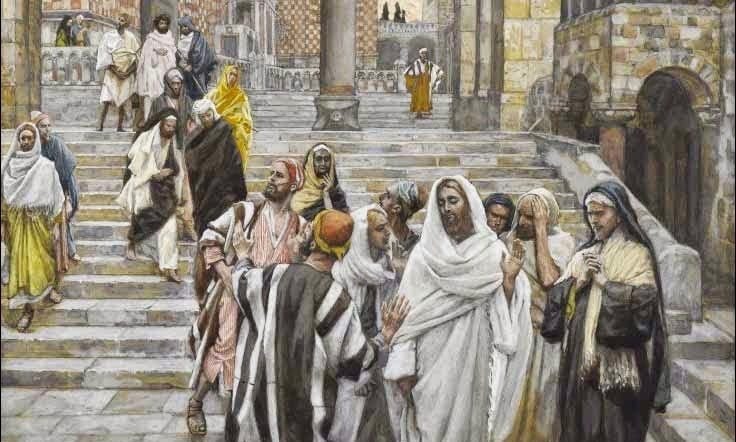
We’re hooked on crescendos. We crave the ecstatic hosannas of Palm Sunday, the wrenching sorrow of Good Friday, and the blazing glory of Easter morning. But what about the days in between? The unheralded Monday, Tuesday, and Wednesday of Holy Week often slip past us like shadows, unmarked in many churches by liturgical fanfare. And yet it’s here, too, in the quiet, in the ordinary, in the grinding tension before the storm—that we glimpse the texture of Christ’s faithfulness.
The middle days feel almost like a pause between Palm Sunday and Maundy Thursday. We’re eager to rush on to the drama, the spectacle, the liturgies that move us. But the Church slows us down. It insists that we pay attention not just to divine heights and human lows, but also to the long plain between them. Here, in the days in between, Christ is walking the same dusty streets, touching the same worn stones of Jerusalem, speaking familiar words to hostile crowds. And he’s doing so knowing that the hours are running out.
Jesus doesn’t retreat in these middle days. He doesn’t pause to bask in the crowd’s fleeting praise, nor does he give in to dread. Instead, he moves with a kind of steadfast clarity that ought to unsettle and inspire us. He clears the temple. He teaches the stubborn. He shares bread with his betrayer. There’s no grand spectacle in these acts, only the quiet, relentless motion of love heading unshakably toward the cross.
Monday: The Fire of Divine Disruption
The Jesus we meet on Monday isn’t the meek figure of stained-glass sentimentality. He’s the one who enters the temple precincts and overturns tables. He drives out the money-changers. He disrupts business as usual. “My house shall be called a house of prayer,” he says, “but you have made it a den of thieves.” (Matt. 21:13)
This moment echoes with deep liturgical meaning. Holiness rooted in space. Prayer disrupted by noise. Worship intruded upon by transaction. Jesus isn’t lashing out—he’s restoring. He isn’t performative—he’s prophetic. He signals that the temple will fall, and a new one will rise—his own body.
In Scripture, holiness doesn’t coexist with corruption. Jesus, the sinless one (Heb. 4:15), embodies that holiness. He becomes the true temple—the meeting place of heaven and earth.
So what tables need overturning in our lives? What sacred spaces have we filled with distraction, noise, or self-interest? Monday doesn’t offer easy answers. It demands clarity. Jesus isn’t after sentiment—he’s calling for repentance. He invites us into the holiness he embodies.
Tuesday: The Discipline of Steadfast Love
By Tuesday, the tension tightens. The leaders are watching, the people murmuring, the plot underway. Hosanna begins to shift toward crucify. Yet Jesus returns to the temple and teaches. He tells stories. He asks hard questions. He speaks of wedding feasts, of vineyards, of the stone the builders rejected. He warns of hypocrisy. He keeps teaching, as if time weren’t short.
That in itself is astonishing. With death looming, Jesus doesn’t retreat or rush. He remains faithful to the work at hand. He teaches, he loves, he speaks truth—even knowing it may fall on deaf ears. This Tuesday faithfulness isn’t often celebrated. But it might be the hardest kind. Most of Christian life is made of it—the kind of obedience that doesn’t feel triumphant. The kind that stays put. That keeps praying, keeps loving, keeps hoping. Quiet, daily acts of fidelity.
It’s the friend who walks with someone through the fog of depression. The nurse holding the hand of a patient at the end of his or her life. The teacher who keeps encouraging a student who seems not to care. It’s the small, steady commitments—the unglamorous ones—that begin to take on eternal weight.
As Gregory the Great said, “The proof of love is in the works. Where love exists, it works great things.” Christ’s Tuesday work isn’t dazzling. But it’s real, and it’s ours too. He gives us the pattern of discipleship: resilience, not reaction. Commitment, not spectacle.
Wednesday: The Suffering Servant’s Silence
Wednesday is quieter. Tradition calls it Spy Wednesday—the day Judas makes his deal. There are no miracles, no crowds. Just cold betrayal. Judas slips away and agrees to hand Jesus over for thirty pieces of silver—the price of a slave (Exod. 21:32).
And yet Jesus doesn’t flinch. He doesn’t flee. He doesn’t thunder from the heavens or unmask Judas before the hour. Instead, he keeps walking toward what he knows is coming.
Isaiah’s words echo in this silence:
He was oppressed, and he was afflicted, yet he opened not his mouth; like a lamb that is led to the slaughter, and like a sheep before its shearers is silent, so he opened not his mouth. (Isaiah 53:7)
God’s love here is neither loud nor sentimental—it’s restrained, enduring. It absorbs betrayal without returning it. It suffers without striking back.
We’ve all known the pain of betrayal—our own, or someone else’s. We’ve chosen comfort over conviction, safety over truth. And yet, Jesus doesn’t recoil. He even calls Judas friend (Matt. 26:50). Not in sarcasm, but sorrow—and steadfast love.
Spy Wednesday reveals a love that stays close, even in the dark. A love that doesn’t abandon. Christ sees us, knows us, and remains.
The Sanctity of the Middle
The middle days of Holy Week remind us that the Christian life isn’t all triumph and tragedy. Much of it is a long obedience—faith lived in tension, in routine, in waiting.
We tend to imagine God most clearly at the heights and depths: in the miracle or in the crisis. But he’s just as present in the middle—in the teaching, in the tension, in the silence. Our souls are shaped in the long, slow hours of faithfulness.
Perhaps this is why Holy Week gives us these days. Not for filler between more “important” events, but to remind us that discipleship isn’t forged only at the table or the cross, but also in the slow walk between them. In the space where no one is cheering and no one is watching.
These days remind us that God is not impressed by spectacle. He is drawn to the substance of love in action—quiet, enduring, often unnoticed.
When you pray, go into your room and shut the door and pray to your Father who is in secret. And your Father who sees in secret will reward you. (Matt. 6:6)
The middle days are for those who have walked too long without answers. For those who are still loving, still serving, still hoping, even when the story feels stalled. They are the gift to those whose faith isn’t loud, but lasting.
Learning to Linger
If you find yourself in the middle this week—in life, in grief, in waiting—know this: Christ is here. Teaching. Turning over tables. Sitting beside the betrayer. He’s not waiting for the dramatic finale. He’s already working, already loving.
The invitation of these days may simply be this: linger. Don’t rush. Don’t demand a resolution. Stay with Christ in the tension and let the quiet shape you.
Be still, and know that I am God. (Ps. 46:10)
God’s greatest work often unfolds quietly. Grace moves through the back alleys of Jerusalem as much as the upper room. And those who pay attention—who stay with Christ in the temple courts and on the garden path—may find themselves surprised by just how much can happen in the stillness between triumph and tragedy.
This is the way of the cross: not a sprint to glory, but a steady walk in faith. And here, in the quiet middle, we learn what it means to follow.